Hiyashi chūka
Hiyashi chūka is a colourful Japanese summer dish of chilled ramen noodles arranged with fine strips of egg, cucumber, tomato and protein, then dressed with a bright soy-vinegar sauce.
From Chef Ilhama’s recipe collection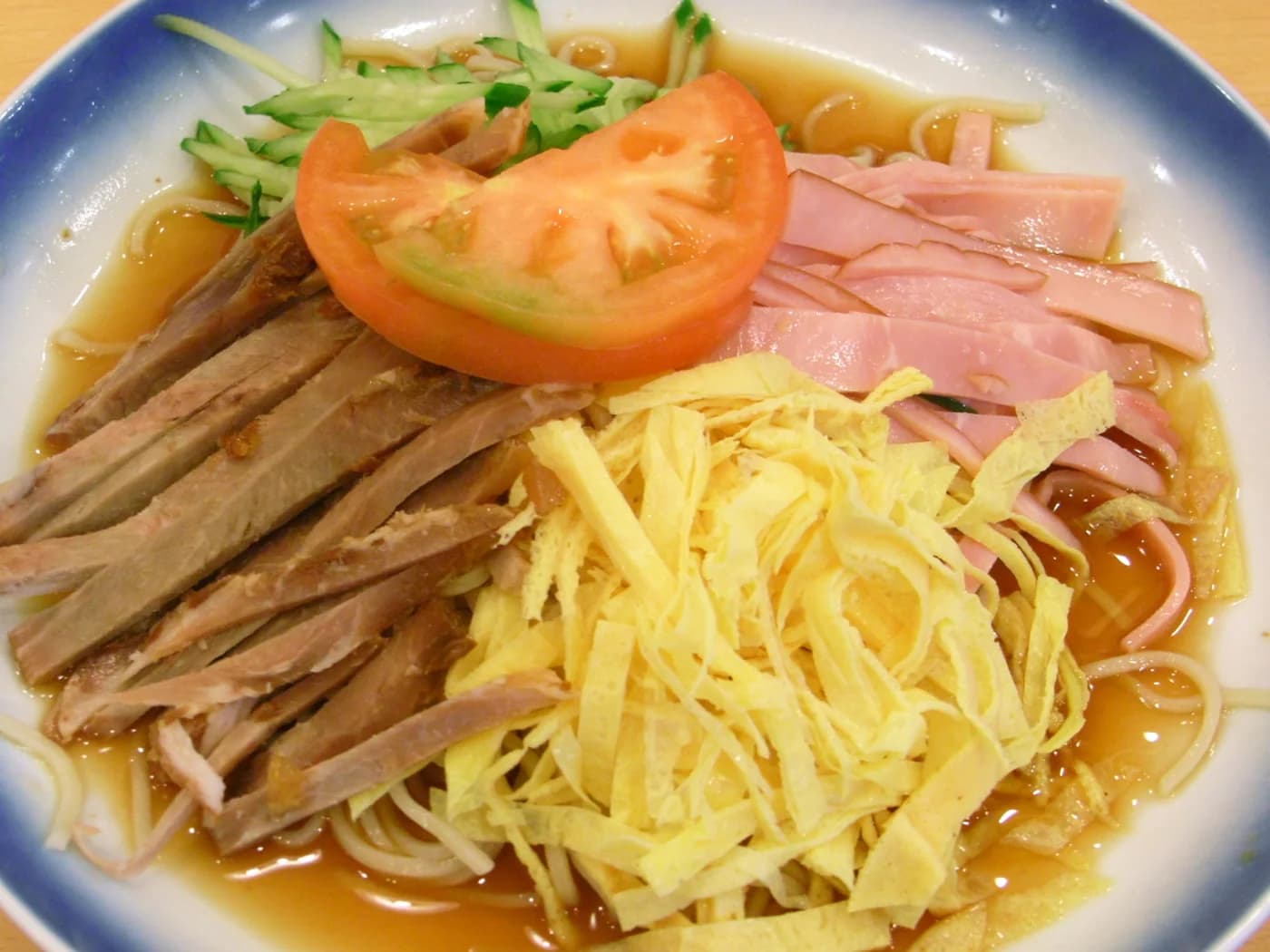
Photo: woinary from Osaka International Airport — Flickr · CC BY-SA 2.0 · Sources
How do you make Hiyashi chūka?
Hiyashi chūka uses 8 ingredients and 5 clear steps. Allow 40 minutes; the recipe yields 4 servings. Check off ingredients and steps as you cook.
What does Hiyashi chūka taste like—and what matters most?
Hiyashi chūka balances springy chilled noodles with sweet-sour soy dressing, sesame aroma and clean bands of cucumber, tomato, egg and chicken.
Rinse the cooked noodles very thoroughly in cold water, rubbing gently to remove surface starch, then drain well so the dressing stays bright rather than diluted.
Fresh ramen gives the intended bounce; thin wheat noodles can work if cooked just firm and chilled immediately, though the texture will differ.
Do not dress the noodles long before eating. Keep dressing, noodles and toppings chilled separately and combine at the table to prevent softness and pooling liquid.
Prepare dressing and toppings up to 2 days ahead. Cooked noodles are best the same day; toss with a trace of neutral oil if they must wait briefly.
Ingredients & Preparation steps
8 items
History note
Hiyashi chūka is a colourful Japanese summer dish of chilled ramen noodles arranged with fine strips of egg, cucumber, tomato and protein, then dressed with a bright soy-vinegar sauce.
5 steps
Whisk soy, vinegar, sesame oil, sugar and grated ginger until the sugar dissolves; chill.
Cook thin omelettes from the eggs, cool and slice into fine strips.
Boil noodles until springy, rinse very well in cold water and drain.
Arrange noodles in shallow bowls and place cucumber, tomato, egg and chicken in separate bands.
Spoon over the chilled dressing just before eating.
Serve cold with Japanese mustard and toasted sesame.
If this recipe caught your eye.
Continue with recipes connected by technique, region and flavour structure.
If you want to feel this quality on your table, the next step is planning the service.
A direct contact for menu curation, event flow, and service tone is the most correct start.