Musakhan
Musakhan layers taboon bread with olive-oil-softened onions, tart sumac and roasted chicken. The communal Palestinian dish is prized for turning a few ingredients into deep savoury flavour.
From Chef Ilhama’s recipe collection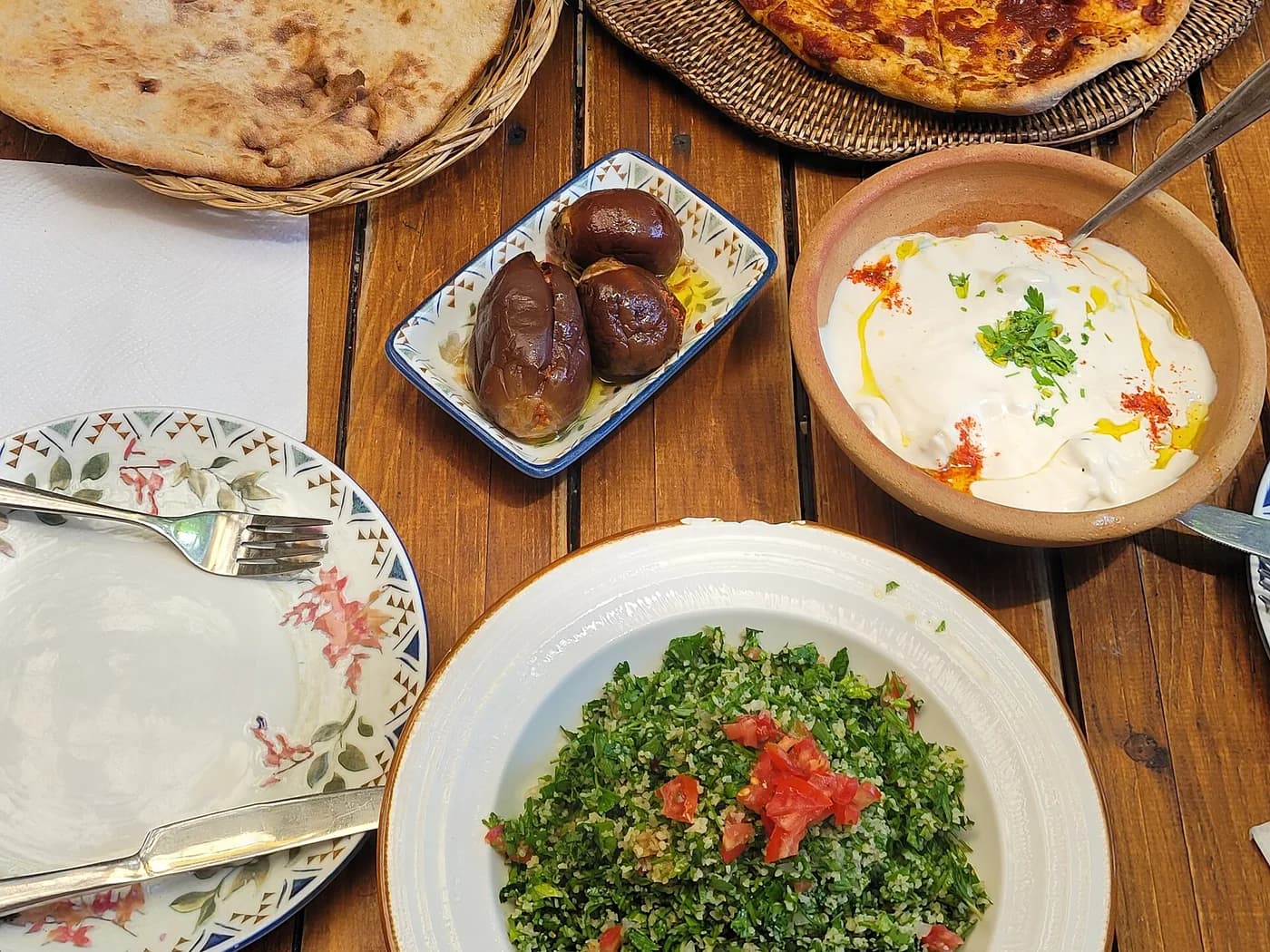
Photo: Manintheopt — Own work · CC BY-SA 4.0 · Sources
How do you make Musakhan?
Musakhan uses 8 ingredients and 5 clear steps. Allow 1 hour 30 minutes; the recipe yields 6 servings. Check off ingredients and steps as you cook.
What does Musakhan taste like—and what matters most?
Musakhan is savoury, fruity-tart and deeply aromatic: sumac brightens roasted chicken while olive-oil-softened onions soak into the flatbread below.
Cook the onions slowly until completely collapsed but not crisp. Their oil becomes the seasoning for the bread, so softness and sweetness matter more than browning.
A sturdy large flatbread can replace taboon when necessary. Warm it first so it absorbs onion oil without splitting or turning brittle.
Do not assemble too early. Layer the warm bread, onions and chicken shortly before the final bake so the base stays rich rather than wet and heavy.
Refrigerate chicken and onion mixture for up to 3 days. Store bread separately and rebuild the layers before reheating in the oven.
Ingredients & Preparation steps
8 items
History note
Musakhan layers taboon bread with olive-oil-softened onions, tart sumac and roasted chicken. The communal Palestinian dish is prized for turning a few ingredients into deep savoury flavour.
5 steps
Season chicken with sumac, allspice, salt, pepper and a little oil; roast at 200°C until cooked through.
Cook onions gently in the remaining olive oil until completely soft, then stir in most of the sumac.
Briefly warm the breads and spoon onion oil over each one.
Layer breads with onions, place chicken on top and bake together for 8 minutes.
Finish with toasted pine nuts and the remaining sumac.
Set the bread and chicken on a large platter and serve with plain yogurt and cucumber salad.
If this recipe caught your eye.
Continue with recipes connected by technique, region and flavour structure.
If you want to feel this quality on your table, the next step is planning the service.
A direct contact for menu curation, event flow, and service tone is the most correct start.