Salteñas
Bolivian salteñas are golden, slightly sweet pastries packed with a juicy spiced stew. Chilling the gelatin-rich filling before shaping keeps the broth sealed inside until baking.
From Chef Ilhama’s recipe collection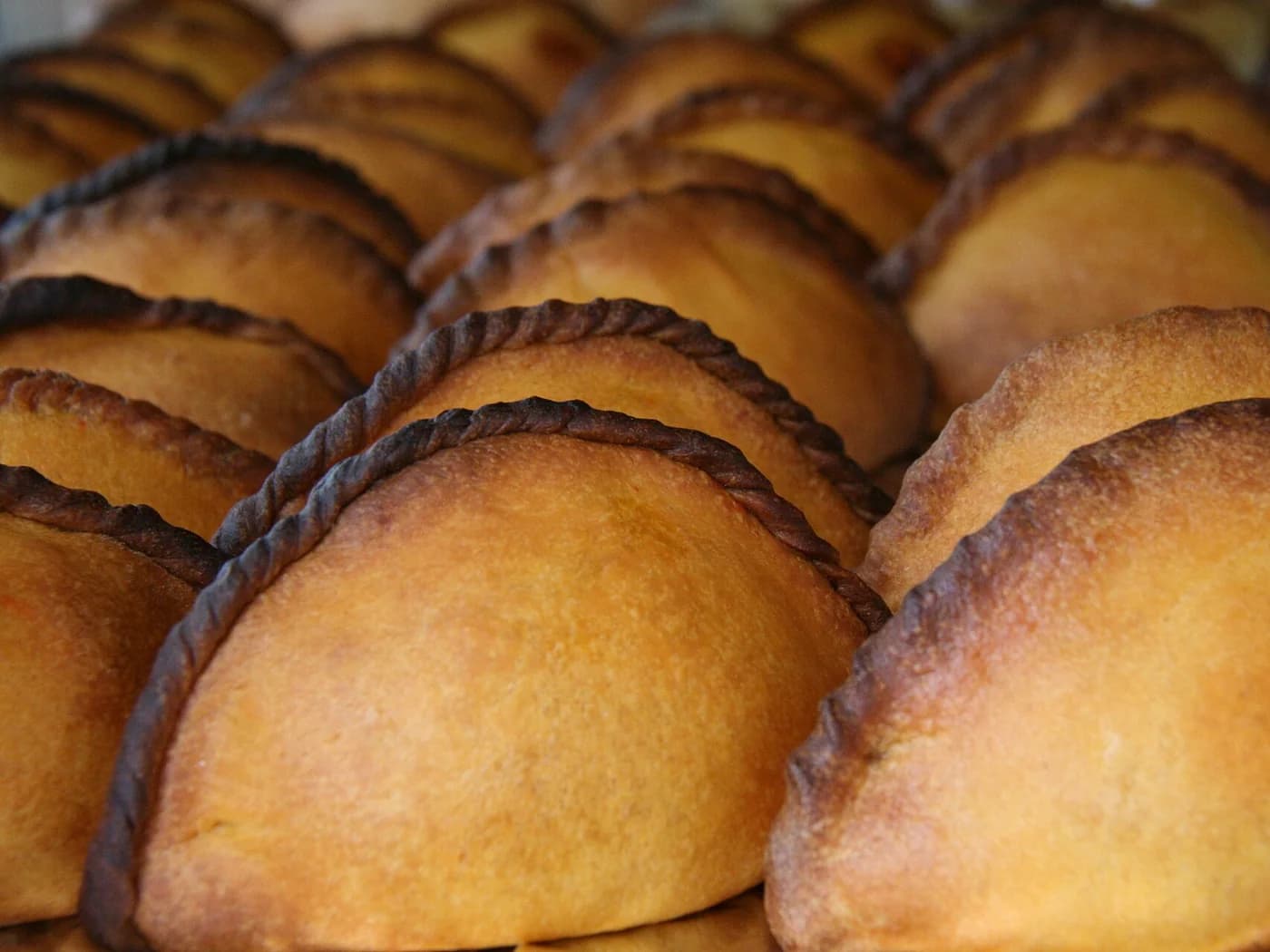
Photo: Tamorlan — Own work · CC BY 3.0 · Sources
How do you make Salteñas?
Salteñas uses 8 ingredients and 5 clear steps. Allow 2 hours 30 minutes; the recipe yields 12 pastries. Check off ingredients and steps as you cook.
What does Salteñas taste like—and what matters most?
Salteñas combine a lightly sweet, golden pastry with a savoury, gently spicy and famously juicy meat filling.
Chill the cooked filling until its natural gelatin and starch set firmly. Cold filling is the key to sealing a pastry that bakes juicy rather than leaking.
A concentrated homemade stock gives the best set; powdered gelatin can support a weak stock, but should not make the filling rubbery.
Do not overfill or let sauce touch the sealing edge. Keep the rim clean, press out air and crimp firmly.
Freeze shaped unbaked pastries on a tray, then bag them for up to 2 months. Bake from frozen with extra time rather than thawing fully.
Ingredients & Preparation steps
8 items
History note
Bolivian salteñas are golden, slightly sweet pastries packed with a juicy spiced stew. Chilling the gelatin-rich filling before shaping keeps the broth sealed inside until baking.
5 steps
Cook onion, chilli and cumin, add beef and stock, then simmer until tender; add potato and peas near the end.
Stir gelatin into the hot filling, cool, fold in chopped egg and olives, then refrigerate until firmly set.
Make a supple dough with flour, butter, sugar, achiote, salt and warm water; rest for 30 minutes.
Roll twelve discs, mound chilled filling in each and seal upright with a tight braided edge.
Brush with egg and bake at 210°C for 18–22 minutes until deeply golden.
Eat hot from the oven with a spoon and napkin; llajua chilli sauce is traditional alongside.
If this recipe caught your eye.
Continue with recipes connected by technique, region and flavour structure.
If you want to feel this quality on your table, the next step is planning the service.
A direct contact for menu curation, event flow, and service tone is the most correct start.