Shiro wat
Shiro wat is a smooth Ethiopian stew made from seasoned chickpea flour, onions and berbere. Constant whisking produces a silky, deeply spiced sauce suited to fasting meals.
From Chef Ilhama’s recipe collection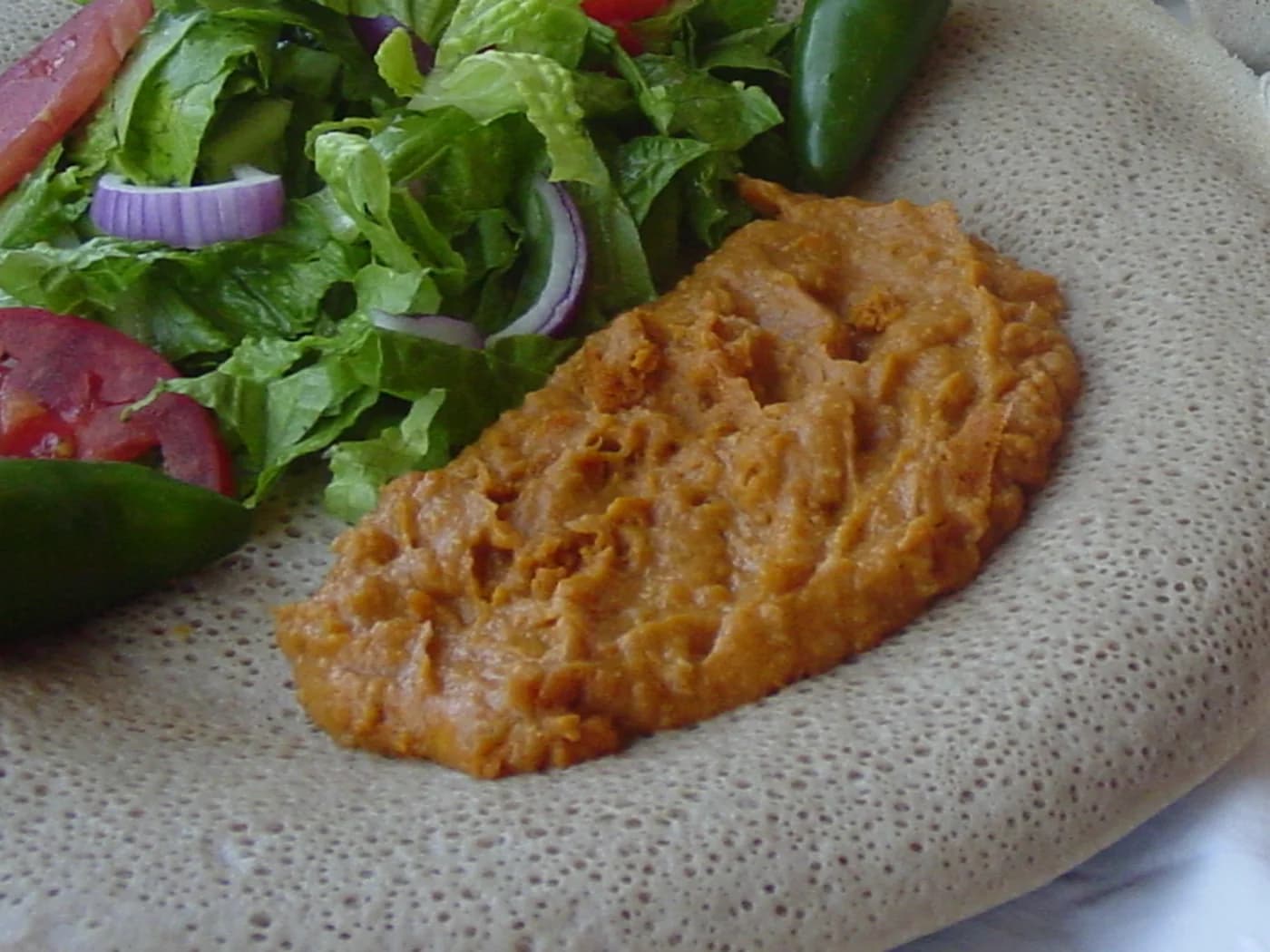
Photo: Temesgen Woldezion; edited by Merhawie Woldezion — w:en:File:Taita and shiro.jpg · CC BY-SA 2.5 · Sources
How do you make Shiro wat?
Shiro wat uses 8 ingredients and 5 clear steps. Allow 45 minutes; the recipe yields 6 servings. Check off ingredients and steps as you cook.
What does Shiro wat taste like—and what matters most?
Shiro wat is smooth, earthy and warmly spiced, with chickpea flour carrying the heat of berbere and the round richness of niter kibbeh.
Whisk the flour with cool water first, then stream the slurry into the onion base. Frequent stirring during the simmer prevents lumps and scorching.
Finely milled plain chickpea flour works when a seasoned shiro blend is unavailable; adjust berbere and salt gradually because blends vary widely.
Do not rush the flour. A raw pulse taste means it needs more gentle simmering, while very high heat can catch the thick stew on the base of the pot.
Refrigerate for up to 4 days. It thickens substantially when cold, so loosen slowly with hot water while reheating and stir from the bottom.
Ingredients & Preparation steps
8 items
History note
Shiro wat is a smooth Ethiopian stew made from seasoned chickpea flour, onions and berbere. Constant whisking produces a silky, deeply spiced sauce suited to fasting meals.
5 steps
Cook onions without oil over medium-low heat until soft and most moisture evaporates.
Add niter kibbeh, garlic, berbere and tomato paste and cook until fragrant.
Whisk shiro flour with 400 ml cool water into a lump-free slurry.
Whisk the slurry into the onion base, then add remaining water gradually.
Simmer for 20–25 minutes, stirring frequently, until glossy and cooked through.
Serve hot on injera with cooked greens and lentils.
If this recipe caught your eye.
Continue with recipes connected by technique, region and flavour structure.
If you want to feel this quality on your table, the next step is planning the service.
A direct contact for menu curation, event flow, and service tone is the most correct start.