Lablabi
Lablabi is a Tunisian chickpea soup assembled over torn day-old bread with garlic, cumin, harissa, lemon and olive oil. Its customisable garnishes make a humble bowl intensely aromatic.
From Chef Ilhama’s recipe collection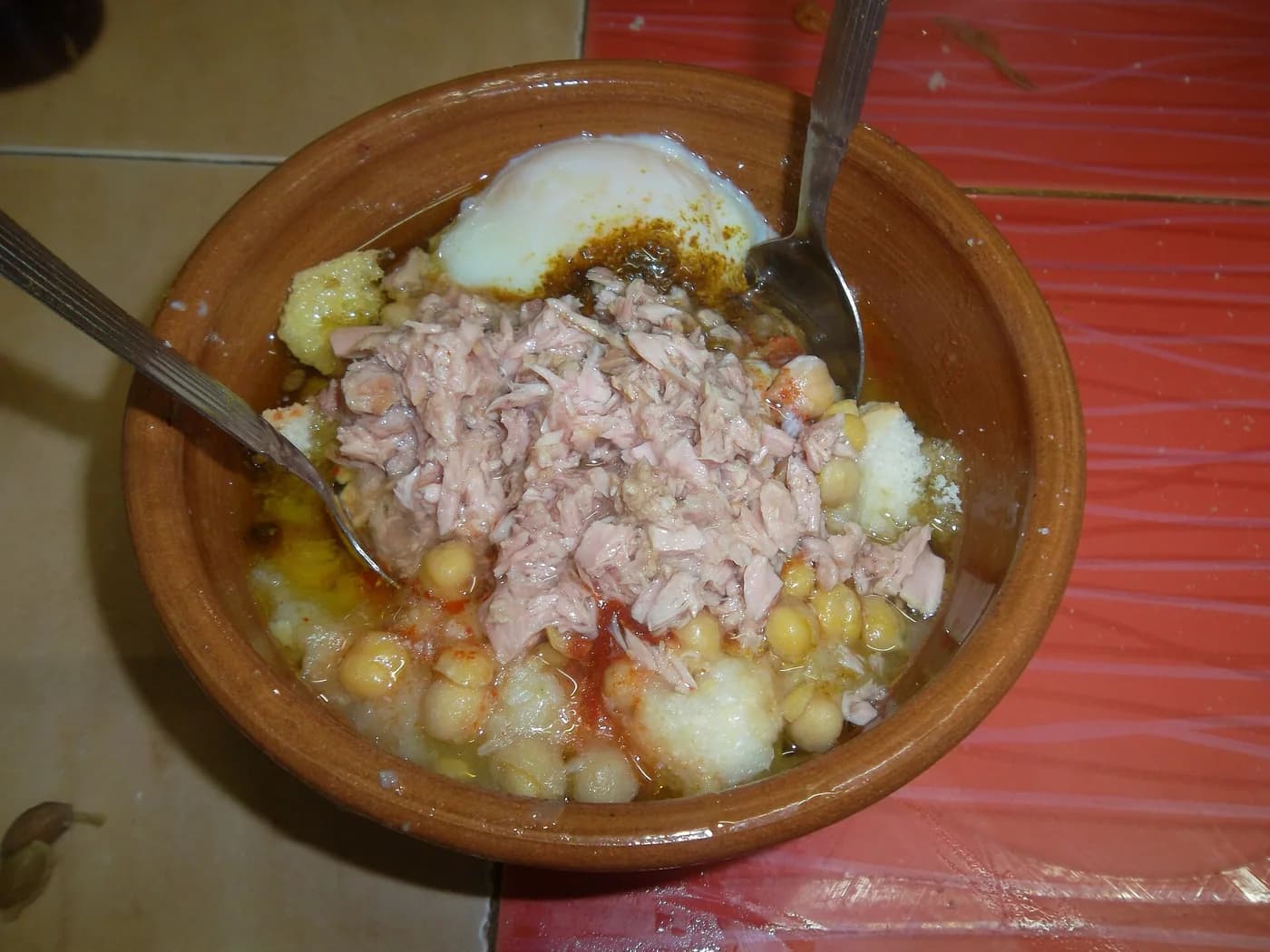
Photo: Touzrimounir — Own work · CC BY-SA 4.0 · Sources
How do you make Lablabi?
Lablabi uses 8 ingredients and 5 clear steps. Allow 45 minutes; the recipe yields 4 servings. Check off ingredients and steps as you cook.
What does Lablabi taste like—and what matters most?
Lablabi is earthy and garlicky, sharpened with lemon and harissa, with bread turning the chickpea broth into a hearty, spoonable meal.
Keep the broth slightly looser than you want before it hits the bowl. Torn bread absorbs liquid quickly and controls the final thickness.
Canned chickpeas save time; rinse them, then simmer in seasoned broth long enough for the beans and liquid to taste connected.
Do not add all the harissa and lemon to the pot at once. Serving them at the table lets each bowl keep its balance.
Refrigerate chickpeas and broth together for up to 4 days, but add bread, egg and garnishes only when serving.
Ingredients & Preparation steps
8 items
History note
Lablabi is a Tunisian chickpea soup assembled over torn day-old bread with garlic, cumin, harissa, lemon and olive oil. Its customisable garnishes make a humble bowl intensely aromatic.
5 steps
Simmer the chickpeas and their liquid with garlic, cumin and salt for 20 minutes.
Poach the eggs separately until the whites set and the yolks remain soft.
Divide torn bread among deep bowls and ladle over enough hot chickpea broth to soften it.
Add chickpeas and an egg to each bowl, then season with harissa and lemon juice.
Finish generously with olive oil, extra cumin and capers.
Let each diner add harissa, lemon, olive oil, capers and a soft egg to taste.
If this recipe caught your eye.
Continue with recipes connected by technique, region and flavour structure.
If you want to feel this quality on your table, the next step is planning the service.
A direct contact for menu curation, event flow, and service tone is the most correct start.