Açorda alentejana
Açorda alentejana is a frugal Portuguese bread soup in which garlic, coriander, olive oil and poached eggs perfume hot water or light stock poured over stale bread.
From Chef Ilhama’s recipe collection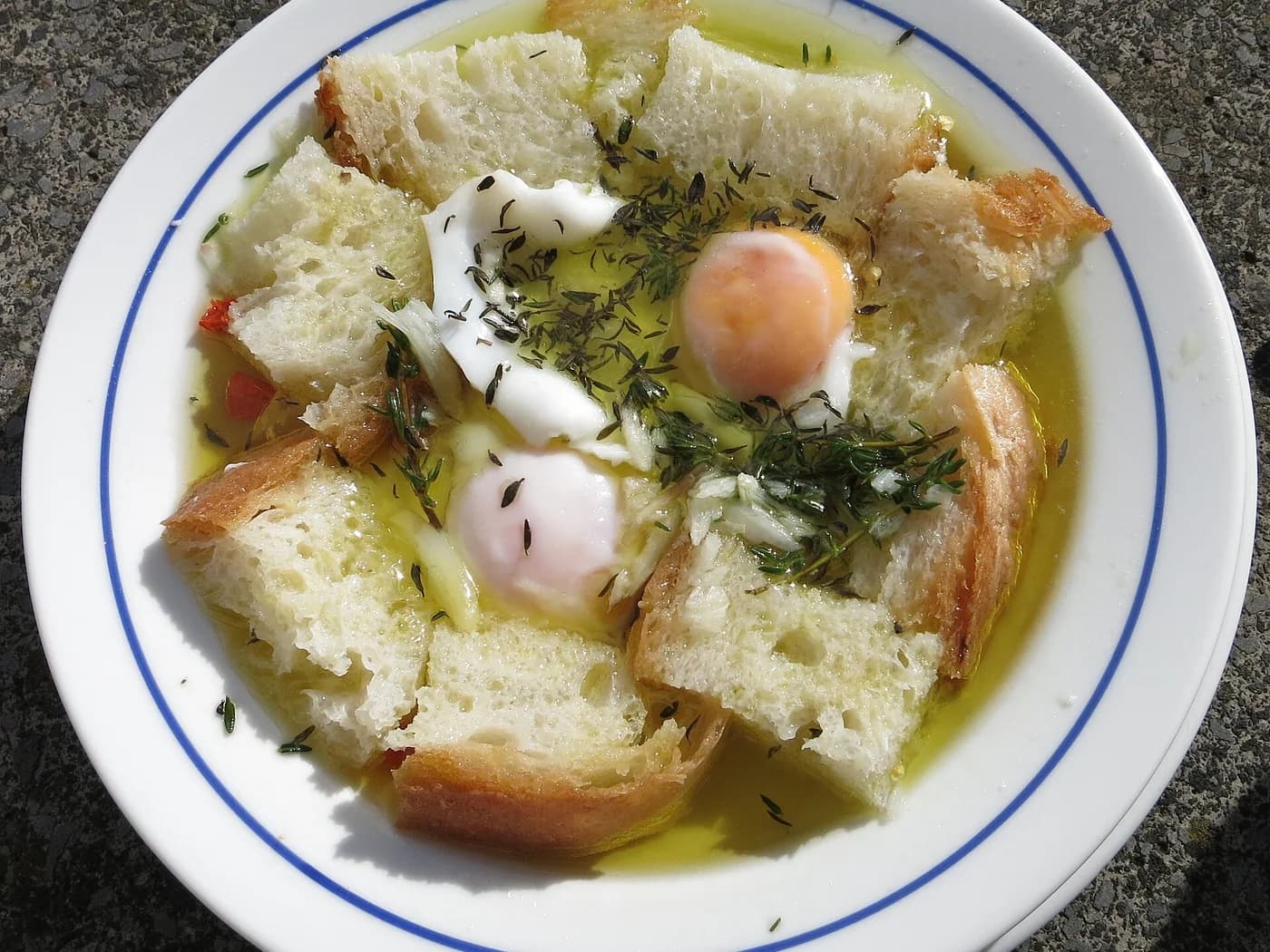
Photo: Ramessos — Own work · CC BY-SA 4.0 · Sources
How do you make Açorda alentejana?
Açorda alentejana uses 8 ingredients and 5 clear steps. Allow 35 minutes; the recipe yields 4 servings. Check off ingredients and steps as you cook.
What does Açorda alentejana taste like—and what matters most?
Açorda alentejana is garlic-forward, grassy with coriander and rich with olive oil, while vinegar and a soft poached egg keep the bread broth lively.
Pound garlic, coriander stems and salt into a paste directly for the bowls. Pouring very hot broth over it releases aroma without dulling the fresh herb character.
A day-old open-crumb country loaf is ideal. If using fresh bread, dry the slices briefly in a low oven so they absorb broth without dissolving immediately.
Do not boil the herb paste for a long time or flood every bowl at once. Assemble to order so the bread softens but retains a little structure.
Store broth and herb paste separately for up to 2 days. Poach fresh eggs and add bread only when serving; assembled açorda does not reheat well.
Ingredients & Preparation steps
8 items
History note
Açorda alentejana is a frugal Portuguese bread soup in which garlic, coriander, olive oil and poached eggs perfume hot water or light stock poured over stale bread.
5 steps
Pound garlic, coriander stems and salt into a paste and divide among serving bowls with olive oil.
Bring water or stock to a gentle simmer and season with vinegar.
Poach the eggs until the whites set and the yolks stay soft, then lift out.
Pour the very hot broth over the herb paste and stir.
Add bread and a poached egg to each bowl and finish with coriander leaves.
Serve at once with extra olive oil; poached cod can be added for a fuller meal.
If this recipe caught your eye.
Continue with recipes connected by technique, region and flavour structure.
If you want to feel this quality on your table, the next step is planning the service.
A direct contact for menu curation, event flow, and service tone is the most correct start.