Pakhala bhata
Pakhala bhata is Odisha's cooling rice dish, in which cooked rice rests in water and is served lightly fermented or freshly soaked. Yogurt, ginger and a fragrant mustard-seed tempering make it especially refreshing in hot weather.
From Chef Ilhama’s recipe collection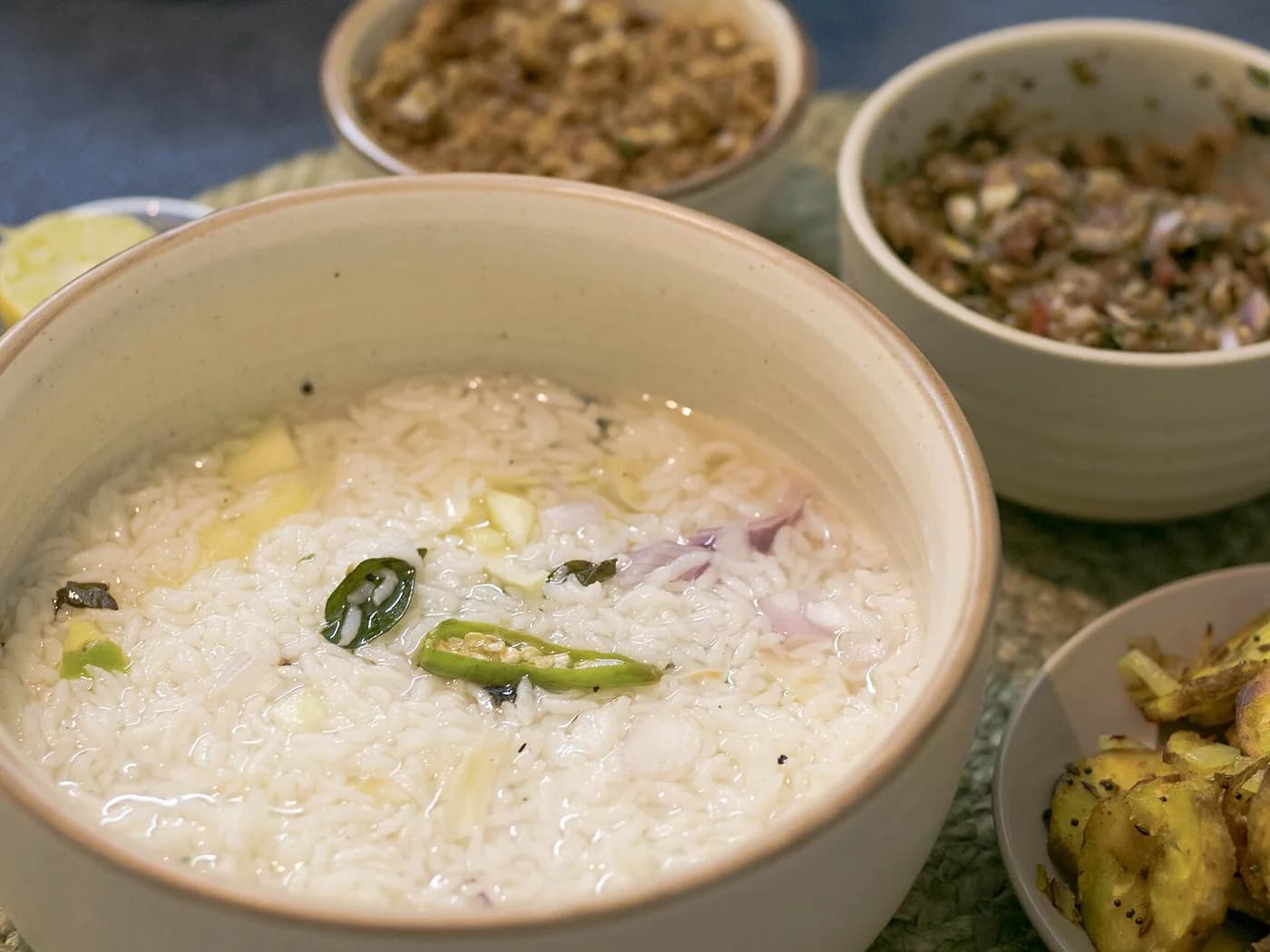
Photo: Subhashish Panigrahi — Own work · CC BY-SA 4.0 · Sources
How do you make Pakhala bhata?
Pakhala bhata uses 8 ingredients and 5 clear steps. Allow 8 hours 20 minutes; the recipe yields 4 servings. Check off ingredients and steps as you cook.
What does Pakhala bhata taste like—and what matters most?
Pakhala bhata is cooling, lightly sour and rice-forward, with yogurt, herbs, fried sides and mustard-led tempering adding contrast.
Use clean utensils and potable water, and keep the rice protected while it rests. In warm kitchens, controlled refrigeration is the safer choice.
Plain unsweetened yogurt can supply acidity when a long rest is impractical, though it does not recreate the same fermented character.
Discard rice with an unpleasant odour, visible mould or unusual colour. Fermentation should never be used to rescue rice handled unsafely.
Treat cooked rice carefully: cool promptly, refrigerate and consume within a short window. Do not repeatedly return warmed portions to storage.
Ingredients & Preparation steps
8 items
History note
Pakhala bhata is Odisha's cooling rice dish, in which cooked rice rests in water and is served lightly fermented or freshly soaked. Yogurt, ginger and a fragrant mustard-seed tempering make it especially refreshing in hot weather.
5 steps
Combine the cooled rice with boiled cooled water in a clean covered container.
For a lightly fermented version, refrigerate for 8 hours; do not leave cooked rice warm at room temperature.
Stir in yogurt, ginger and salt until the soaking liquid becomes creamy.
Bloom mustard seeds, curry leaves and green chillies in hot oil and pour the tempering over the rice.
Mix gently and serve chilled with the chosen side dishes.
Serve cold with roasted vegetables, fried fish, badi chura or a simple potato fry.
If this recipe caught your eye.
Continue with recipes connected by technique, region and flavour structure.
If you want to feel this quality on your table, the next step is planning the service.
A direct contact for menu curation, event flow, and service tone is the most correct start.