Undhiyu
Undhiyu is Gujarat's elaborate winter vegetable dish, traditionally cooked slowly with seasonal beans, roots, green masala and fenugreek dumplings. Its name refers to the old upside-down earthen-pot method.
From Chef Ilhama’s recipe collection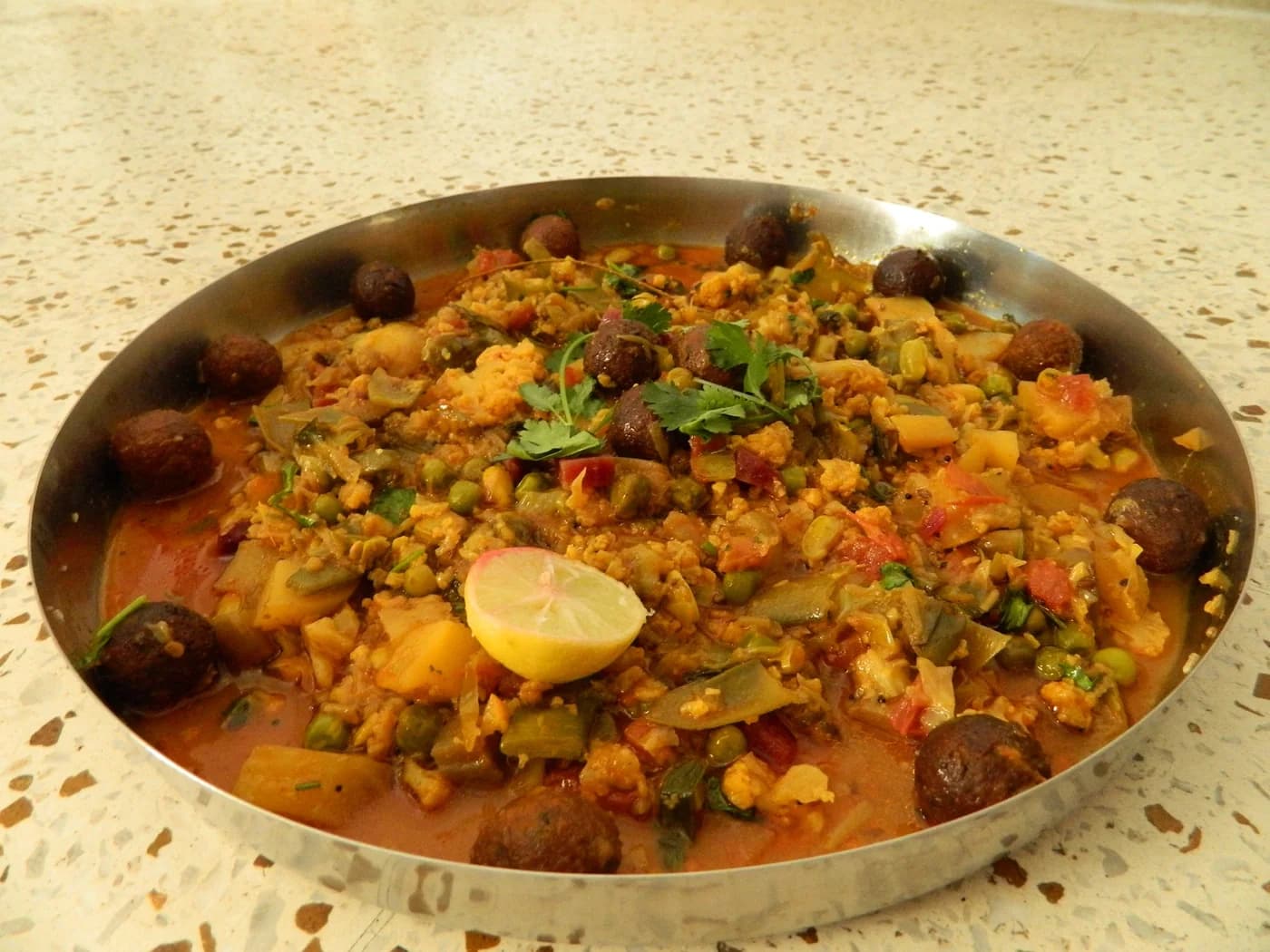
Photo: Jatan1992 — Own work · CC BY-SA 4.0 · Sources
How do you make Undhiyu?
Undhiyu uses 8 ingredients and 5 clear steps. Allow 2 hours; the recipe yields 8 servings. Check off ingredients and steps as you cook.
What does Undhiyu taste like—and what matters most?
Undhiyu is layered and aromatic: earthy roots, sweet green vegetables, coconut, herbs and fenugreek dumplings meet warm spice and gentle sweetness.
Stage vegetables by density instead of adding everything together. Firm roots need a head start; tender beans and dumplings should keep their shape.
Use the freshest mix of seasonal roots, beans and small aubergines available. The layered method matters more than forcing one unavailable vegetable.
Do not stir hard once the pot is layered. Turn ingredients gently so the vegetables and muthiya dumplings remain distinct.
Refrigerate for up to 3 days. Reheat slowly with a spoonful of water; high heat can break the vegetables and make the coconut mixture catch.
Ingredients & Preparation steps
8 items
History note
Undhiyu is Gujarat's elaborate winter vegetable dish, traditionally cooked slowly with seasonal beans, roots, green masala and fenugreek dumplings. Its name refers to the old upside-down earthen-pot method.
5 steps
Mix coconut, coriander, peanuts, sesame, ginger, garlic, chilli and spices into a coarse green masala.
Combine fenugreek, chickpea flour and seasoning with a little oil and water; shape small muthiya and steam or shallow-fry.
Slit the aubergines and potatoes and pack with masala; cut yam and banana into large pieces.
Layer beans, roots and stuffed vegetables in a heavy pot with remaining masala, oil and a splash of water; cover tightly and cook gently.
When tender, fold in the muthiya without breaking the vegetables and cook for five more minutes.
Serve hot with puri, shrikhand and a squeeze of lime for a festive Gujarati meal.
If this recipe caught your eye.
Continue with recipes connected by technique, region and flavour structure.
If you want to feel this quality on your table, the next step is planning the service.
A direct contact for menu curation, event flow, and service tone is the most correct start.